| |
| Tuesday 20 October 2026 |
| How we laughed – the golden age
of British comedy |
| Tyler Butterworth |
 |
It’s said in our theatrical history that there was a Golden Age of British
Comedy. It ran from the 1970’s to the 1980’s and occurred as we started to
drift away from theatres and radios, and found ourselves living through a
wonderfully rich period of television comedy. Some say this period has never
been bettered. Tyler Butterworth - Biography Tyler Butterworth grew up in a theatrical family and spent twenty five years as an actor working extensively in film, television, theatre and radio. He then worked as a development producer in television documentaries. Now, he produces walking audio guides to cities across Europe for private clients. He lives in Sussex where he walks on the South Downs and the South Coast. |
|
| Tuesday 17 November 2026 |
| A Family Affair: Florence and the House of Medici |
| Jo Walton |
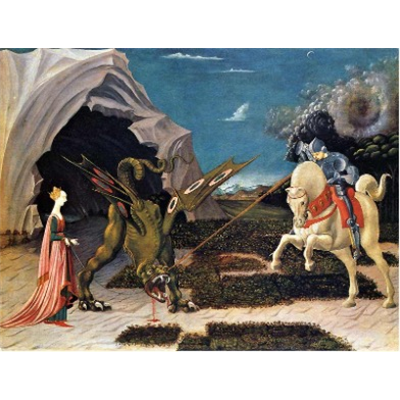 |
The names ‘Florence’ and ‘Medici’ are inextricably linked with each other. From the late 1300s to 1737 the family advised, ruled, were exiled, returned and ruled again in Florence in continuing cycles, eventually stamping their authority on the city with authoritarian firmness. At the same time they were responsible for helping to create one of the most vibrant artistic centres of the Renaissance and beyond. This is a story filled with larger-than-life characters and great art alongside stirring historical events, occasional assassinations, and the eventual decline of a remarkable dynasty. Jo Walton - Biography Jo has combined teaching and lecturing with a career in art bookselling and has been a volunteer guide at both Tate Britain and Tate Modern. Now a freelance lecturer for The Arts Society, The National Gallery, The Art Fund, and local art societies. |
|
| Tuesday 15 December 2026 |
| A Dickens of a Christmas and God
Bless Us Everyone |
| Bertie Pearce |
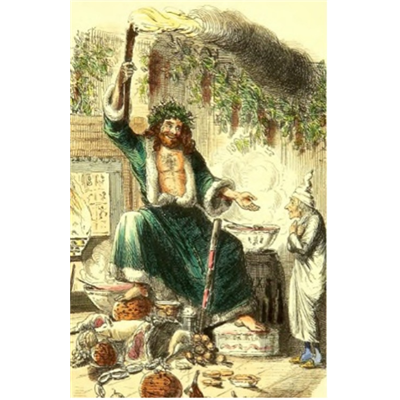 |
Charles Dickens has often been proclaimed as “The Man Who Invented
Christmas” and indeed on hearing that Dickens had died, a cockney barrow-
girl said: “Dickens dead? Then will Father Christmas die too?” Dickens
revived the Christmas traditions with his warm portrayal of Christmas in the
domestic setting; with plum pudding, piping hot turkey, games, dancing and
family cheer by the hearth. Although he celebrated Christmas in numerous
works it is his enduring master piece, ‘A Christmas Carol’ published on 19th
December 1843 which immortalises the spirit of Christmas Cheer. Bertie Pearce - Biography Bertie has a BA (Hons) in Drama from Manchester University, and a Diploma Internationale from the École Internationale du Théatre, Jacques Lecoq. A member of the Inner Magic Circle, with Gold Star. Past experience includes lecturing and performing on cruise ships, and to U3A, historical societies, festivals, schools and colleges. In addition, has toured the world with a magic cabaret show and a one man show entitled All Aboard. Has written articles for newspapers and magazines on entertainment and theatre. |
|
| Tuesday 19 January 2027 |
| The Curious History of the Artists’
Rifles Corp |
| Lucinda Hawksley |
 |
In the mid-nineteenth century, fears that France was about to invade England,
caused a large number of army corps to be set up. Almost every trade –
bakers, railway-workers, butchers, bankers - had its own regiment. Artists
were no exception. The registration book of the Artists' Rifles Corp reads like
an artistic edition of "Who's Who", every important name is in there: Dante
Rossetti, Lord Leighton, John Millais, Laurence Alma-Tadema to name just a
few. Where Lord Leighton was, so were fabulous and exotic parties and
initially the regiment was something of a joke, more of a social club than a
serious military corp. Lucinda Hawksley - Biography Lucinda Hawksley is an author, broadcaster, lecturer and award-winning travel writer, who has worked as an interviewee, consultant and presenter on TV and radio shows worldwide. She has written three biographies of female artists: Kate Perugini (née Dickens), Princess Louise and Lizzie Siddal. Her other books include, Victorian Christmas, Dickens and Travel, Letters of Great Women, Elizabeth Revealed, Dickens and Christmas, The Writer Abroad, Bitten by Witch Fever: Wallpaper and Arsenic in the Victorian Home, Charles Dickens and his Circle, Moustaches, Whiskers & Beards (Facial Hair in Art), and March, Women, March: Voices of the Women’s Movement. Lucinda’s many TV credits include Miriam’s Dickensian Christmas, a show she created with the Dickens-loving actress Miriam Margolyes, Charles Dickens with Gyles Brandreth, World’s Greatest Paintings, A Very Country Christmas, Paul O’Grady’s Great British Escape, The Project, Landscape Artist of the Year, Queen Victoria and her Tragic Family, Cathedrals of Steam – Europe’s Most Famous Train Stations, Missing Masterpieces, Queen Victoria’s Children, Mrs Dickens’s Family Christmas, Dickens and Health, Find My Past: The Staplehurst Rail Crash, Charles Dickens’s Secret Lover and Charles Dickens and the Invention of Christmas. Lucinda co-wrote and narrated The Real Sherlock, a six-part podcast series about Arthur Conan-Doyle, for Audible. She has also written and narrated, for Audible, the introductions for Our Mutual Friend and The Mystery of Edwin Drood. Her other voice-over work includes art gallery audio guides and a children’s audio guide to Stonehenge. She is a great great great granddaughter of Charles and Catherine Dickens, and a Patron of the Charles Dickens Museum in London; she is also a Patron of the De Morgan Foundation. In 2024 she became the President of the International Dickens Fellowship. Awards, Qualifications & Memberships: MA in Literature and History of Art
Winner of the Ed Lacy Travel Writing Award
President of the International Dickens Fellowship
Fellow of the Royal Literary Fund
Fellow of the RSA
Board Member of the Society of Authors
Patron of the Charles Dickens Museum
Patron of the De Morgan Foundation |
|
| Tuesday 16 February 2027 |
| A History of Colour: Blue |
| Alice White |
 |
Loaded with symbolism, the colour blue creates meaning, provokes emotion
and ignites memory on a personal, and a cultural level, throughout the world.
From the sacred shade of Ultramarine, to the ancient roots of Indigo, to the
startling alchemy of Prussian, blue has been used to venerate icons since the
earliest human civilizations. Enjoy this rich history of colour via two powerful
forces: Impressionism and Japanese Print.
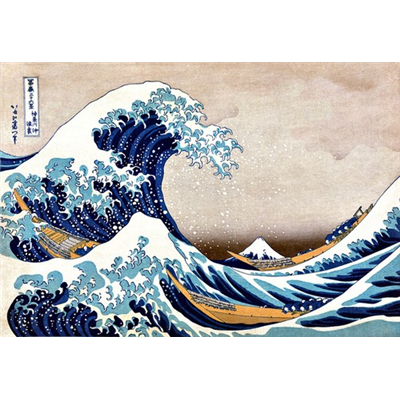
When Monet’s water-lilies met Hokusai’s Great Wave, the values of art
changed forever. Alice White - Biography Alice White is a contemporary oil-painter, and a Tutor at Central St Martins College of Art (UAL) and University College London. She has provided Guest Lectures at King's College London, The Art Workers' Guild, the Courtauld Institute of Art. Her essay 'A Painter's Perspective' is published in Alfred Cohen: An American Artist in Europe (Alfred Cohen Art Foundation and Ben Uri Gallery 2020). Her article ‘How to Look at Painting’ was printed in The Art Society Magazine (July 2020). Alice’s solo show 'A New Wave' documented her year’s residency as Artist for Animals at ZSL London Zoo. Recent projects include 'The Art of Science' (Scott Polar Institute, University of Cambridge 2021). She regularly exhibits at the Mall Galleries in London. |
|
| Tuesday 16 March 2027 |
| The Brilliance of British
Architecture |
| Ian Swankie |
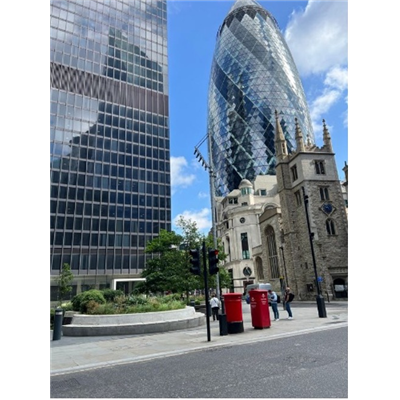 |
In the field of world class architecture, British talent has always been at the forefront, and we have much to celebrate. In this talk, Ian tour's around the UK and overseas showcasing the brilliance of some of the designers who have made huge improvements to the built environment and enhanced the lives of those around them. Famous names like Lutyens, Gilbert Scott, Foster, Hadid and Rogers are joined by several lesser known but equally creative architects. Ian Swankie - Biography A Londoner with a contagious enthusiasm for art and architecture, Ian is an official guide at Tate Modern, Tate Britain, Guildhall Art Gallery and St Paul’s Cathedral. He is also a freelance London tour guide. Since 2012 he has led a popular weekly independent art lecture group in his home town of Richmond in West London. He is an Accredited Lecturer of The Arts Society and a Freeman of the Worshipful Company of Art Scholars, one of the City livery companies. |
|
| Tuesday 20 April 2027 |
| Palmyra: Bride of the Desert |
| Dr Paul Roberts |
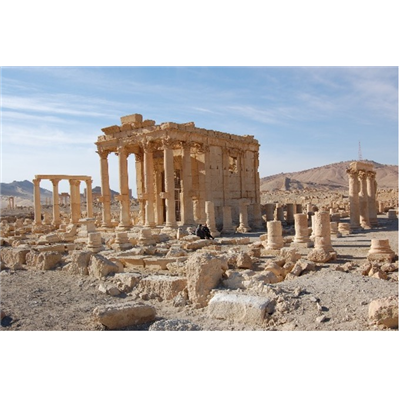 |
In this talk we look at one of the most beautiful cities of the ancient world, the fabled city of Palmyra, in the Syrian desert. Palmyra arose on a trade route that brought silk, spices and other luxuries across the desert from the east. Her wealth and power are displayed in gorgeous monuments, while her people, wealthy, sophisticated and cosmopolitan, are preserved in their hauntingly beautiful funeral portraits. Palmyra became so powerful during the Roman empire that its warrior queen Zenobia challenged Rome itself. We’ll see Palmyra’s meteoric rise and its dramatic fall, its rediscovery by English lords, its influence on art and architecture, and then its desecration by Isis. But we finish with the hope that beautiful Palmyra will rise again… Dr Paul Roberts - Biography Dr Paul Roberts OBE is Research Keeper in the Department of Antiquities at the Ashmolean Museum of Art and Archaeology, Oxford University. Paul has been a lecturer with the Arts Society/NADFAS for over twenty years, has travelled extensively to societies across the UK, and has also lectured on numerous cruises in and around the Mediterranean. Like all of us, he enjoys the immediate contact of face to face meetings, but is happy to provide online lectures if desired. He studied Classics at the University of Cambridge, and Classical Archaeology at the Universities of Sheffield and Oxford. He then lived in Italy for several years, teaching and researching. He has travelled throughout the former lands of the Roman Empire, from Britain to Syria, and has excavated in Britain, Greece, Libya, Turkey and in particular Italy, where he is currently working on a Roman Villa in the Molise region of the Central Apennines. His research focuses on the daily life of ordinary people in the Greek and Roman worlds, and he has written books and articles on Greek and Roman daily life, Pompeii and Herculaneum, Sicily, Roman Emperors, mummy portraits, and Greek and Roman ceramics and glass. In 2024 his book "Ancient Rome in Fifty Monuments", looking at the history of Rome through its monuments and the Emperors who built them, was published by Thames and Hudson. From 1994 to 2015 he was Senior Roman Curator in the Greek and Roman Department at the British Museum, where he curated the exhibition Life and Death in Pompeii and Herculaneum (2013). Arriving in the Ashmolean Museum, Oxford in 2015, in 2019/20 he curated Last Supper in Pompeii, a tribute to the Roman love affair with food and wine. He was awarded an OBE in the New Year Honours List 2025 for services to Archaeology and Heritage. |
|
| Tuesday 18 May 2027 |
| Opium - Seduction, Greed, Art |
| Amanda Herries |
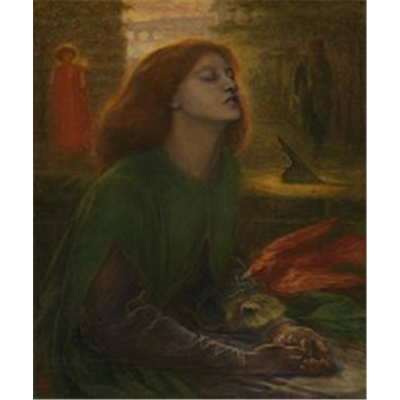 |
The source of the stuff of dreams, the poppy is a beautiful, fragile flower with immense power. Opium (from the greek ‘opion’ – poppy juice) is a hypnotic bringer of sleep, delightful lethargy and relief from pain. It is also highly addictive. Greed led to the introduction of this hugely desirable substance first to China, and then to Europe. The beguiling seduction of its effects led to its use to quieten troubled minds and calm agitated children and babies. Its use – often by those with troubled minds – led to the creation of great works of art in music, art and literature. Social and art history meet as this lecture unfolds. Amanda Herries - Biography Read Archaeology & Anthropology at Cambridge University. 1978-1988 Curator at Museum of London specialising in the decorative arts 1714 to present day, exhibitions, lectures, booklets, broadcasts. 1988-1995 moved with family to Japan, lecturing and writing on Oriental / Western cross-cultural and artistic influences. 1995 returned to UK, fundraising for arts companies, writing, lecturing and guiding tours to Japan and of gardens and general history in Scotland. Curated exhibition on Japanese plants and gardens in London and Edinburgh as part of Japan/British celebrations in 2001. Catalogued over 2500 oil paintings for Southern Scotland for the ArtUK project for entry. Many publications on Japanese plant and garden influences in the West. Most recent publication on the life and work of Sir Henry Raeburn, Scottish portrait painter (2024). Also curating exhibitions in Scotland. Currently preparing exhibition for 2026 on the Scottish Colourist S.J. Peploe. |
|
| Tuesday 15 June 2027 |
| The Echoing Scream: the Birth of Expressionism |
| Gavin Plumley |
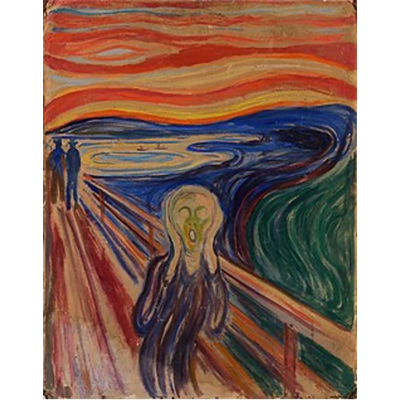 |
When Edvard Munch created The Scream in 1893, he was responding to an intense emotional experience. Today, we would call it a panic attack. Crippling and anxious making, this primal cry was also a rallying call: for Munch and for the wider world of art. It gave birth to a movement known as expressionism, showing life not at it is (realism) or as it might be perceived in a fleeting moment (impressionism), but as it is experienced within the unembellished core of our being. Explosive and emotive, the aftershocks of Munch’s vision were felt across the world: in art and music, literature, dance and film. Gavin Plumley - Biography A writer and broadcaster. Appears on BBC Radio 3 and 4, and contributes to newspapers, magazines and opera and concert programmes worldwide. Lectures widely about the culture of Central Europe. Recent appearances include Klimt and The Kiss in cinemas worldwide, and talks for the Hay and Cheltenham Literature Festivals, the Royal Opera House, the National Gallery, the National Trust, the National Theatre, the British Museum and the V&A. His first book, A Home for All Seasons, is out now. |
|